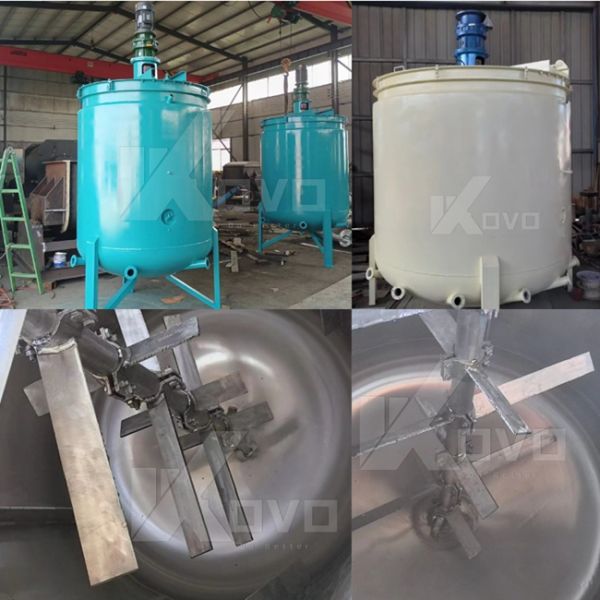
Soap raw materials start from grease and generally go through the
following processes.
1. Saponification
The oil reacts with the base to produce the higher fatty acid
sodium and glycerin (and some water), which is one step in the
process of making soap. In the saponification pot, fully stirred
and heated, the grease layer gradually reduced, the liquid does not
appear stratified, the saponification reaction is completed.
2. Salting out In the closed soap, add salt or saturated salt water
to separate the soap from the dilute glycerin water. The lower
concentration at which the soap precipitates is called the
salting-out concentration. After the closed soap glue is salted
out,the upper soap is called soap granules; The lower layer of
salted glycerin water is drained from the bottom of the soap pan to
recover the glycerin.
3. Wash After separating the waste liquid, add water and steam to
boil the soap granules, so that it becomes a uniform soap glue from
the dissolving state, and washes out the remaining glycerin,
pigment and impurities.
4. Alkali analysis The glycerin, salt, pigment and impurities in
the soap grains were further washed out by alkali analysis in
order to saponify the remaining oil in the soap grains. The lower
alkali concentration that precipitates out completely is called the
alkali water concentration. Adjust enough to split the soap into
upper and lower soap phases. The upper layer is the pure soap base,
and the lower layer is the soap foot. The soap foot is dark in
color and has many impurities, which are generally reused in the
next pot of alkali analysis.
5. The saponification vacuum drying system is a high-temperature
liquid soap base (fatty acid Na) formed by the interaction of
animal and vegetable oils (the main component fatty acids) with
alkali, and then glycerin, additives and other ingredients areadded
at the same time in the process, and then the soap base is changed
from liquid to flake solid under the vacuum of the vacuum dryer due
to the rapid evaporation of water, and the soap base is squeezed
and ground by the refining machine to become soap granules.
The first step in the saponification process: heating the saponification tank.
The second step in the saponification process: air-drying the soap solution.
The third step in the saponification process is grinding into
granules.

Application Industries:
- Food & Beverage Industry: Blended oil, seasoning sauce, fruit
juice, alcohol, dairy products, etc.
- Daily Chemical Industry: Shampoo, body wash, facial cleanser,
sunscreen, laundry detergent, disinfectant hand sanitizer,
dishwashing liquid, skin cream, toothpaste, hair conditioner, etc.
- Pharmaceutical Industry: Oral liquid, ointment, emulsion, vaseline,
cleaning & disinfecting lotion, and other liquid/paste materials.
- Industrial Chemical Industry: White latex, all-purpose adhesive,
paint, chemical cleaning agent, chemical liquid additive, chemical
solution, new polymer liquid materials, etc.
Product show:


Customer's soap made from oils demonstration

Customer showcases across the country


FAQ:
1.Q:What is the production capacity of this high capacity glycerin
soap making machine?
A:The fully automatic saponification machine can produce 500-2000
kg per hour depending on the model. For laundry bar soap (80-100g
per bar), it can output approximately 10,000-25,000 bars per hour.
We offer customizable capacities to meet your production line
requirements.
2.Q: Can this machine produce both glycerin soap and regular
laundry bar soap?
A: Yes, the machine is highly versatile. It can produce glycerin
soap, transparent soap, laundry bar soap, toilet soap, and
medicated soap by adjusting the formula and process parameters. The
saponification system is designed for multiple soap types with the
same production line.
3. Q: What is the difference between this fully automatic
saponification machine and a soap plodder?
A: The saponification machine is the complete production line that
includes fat/oil saponification, neutralization, drying, and
mixing. The soap plodder is only the extruding stage (part of the
finishing section). Our fully automatic line integrates
saponification → drying → mixing → plodding → stamping into one
continuous process.
4. Q: What raw materials does the glycerin soap making machine
require?
A: The machine works with common soap-making raw materials
including:
Fats/Oils: Palm oil, coconut oil, tallow, or vegetable oils
Caustic soda (NaOH) for saponification
Glycerin (optional, can be added or retained)
Additives: Fragrance, colorants, herbal extracts, or moisturizers
We can provide the full formula guidance upon purchase.
5. Q: What is the installation and after-sales support for this
high capacity soap line?
A: We provide:
Free installation guidance with detailed drawings and video
tutorials
On-site support option: Engineers available for overseas
installation and training (travel expenses covered by buyer)
12 months warranty for all electrical and mechanical parts
Lifetime technical support and spare parts supply (wear parts like
seals, molds, and scraper blades always in stock)